
Gear, Packing & Staying Organised
This is the first post in a series developed in collaboration with Faultline Ultra to support those crewing 100-km and 100-mile runners.
When people think about crewing an ultra, they usually think about what gear to bring.
In reality, though, it doesn’t matter whether you brought the gear or not if you can’t actually find it when you need it. As a crew member at a trail/ultra race, your runner will have a good idea of the basics of what they need. However, it’s likely that they have focused on things that ‘work’ and that they have trained with. Your job is to have thought ahead to be ready for when things don’t go according to plan or when your runner enters deeper into the race than their training has ever taken them.
If your runner arrives at a crew point tired, cold, or overwhelmed, you don’t have time to search through bags. You need to know exactly where everything is. When they aren’t sure what they need or what might work, your smooth suggestions and equipment can pull them back off that chair.
The runner and crew need to work as a team. Come race day, though, they have very different jobs; establishing those roles before the race even starts is key to success. For example, your runner might want to pack their own bags to try to reduce crew stress, but in reality, the runner doesn’t need to know where things are; that’s a job for the crew. As crew, you want to take away some of the mental load come race day, so being organised and communicating early will be key to this. (More on this next in next week’s post!)
Your main job as the runner’s crew is to get your runner out of the aid station again with everything they need for the next section, whilst reducing their stress. You want them to come in and out as efficiently as possible without risking them leaving too soon without the essentials for the next stage.
Don’t Just Pack — Build a System
The goal isn’t to bring everything all the time.
It’s to create a system where:
you can find things instantly
you stay calm under pressure
your runner doesn’t have to ask for things, or wait to get them
your runner leaves each aid station confident they have what they need
The simplest way to do this is to group everything into categories. Here are a few good categories that have worked well for me in the past:
1. Nutrition System
Everything your runner might eat or drink.
Include:
primary race nutrition (the food they’ll carry with them; often gels)
aid-station nutrition
backup options (think about textures as well as flavours)
electrolytes
caffeine
nighttime hot options
tea and coffee
There are two main considerations with nutrition. The nutrition they might need whilst in the aid station, and the nutrition they need to carry with them for each section. Keep these two things separated throughout the day. Don’t hesitate to draw on the aid stations as needed.
Early in the race, your runner is likely to be able to stick to their pre-race fuelling plan. Nutrition will go in easily, and things should seem smooth. For this stage of the race, you just need to stick to the plan and keep it all fun and chill.
Have your runner pack the nutrition that they will carry with them, and label these with the name of the aid station that they will pick up the pack from.
Have this ready at the aid station and make sure the runner leaves with the nutrition. If possible, it can be very useful to fill up your runner’s spare water bottles in advance.
For the nutrition that they might eat while at the aid station, the crew should pack and be responsible for this. When the runner first arrives at the aid station, take their rubbish from the previous section and ask if they have any nutrition left over. Knowing if they have taken in all their planned nutrition or not will give you a key piece of info about how the runner is feeling. If they have a lot left over, it means they have not stuck to the plan and are likely low on calories… and the wheels might be about to come off. You might encourage them to spend some extra time in aid to get back on track, and may need to switch to some ‘real food’; have options ready for them.
Early in the race, they likely won’t need to eat much while at the aid station, so just have their standard aid station options available. Always be ready to present them with varying flavours (sweet or savoury) and textures (soft, chewy, crunchy). But don’t panic if they don’t take it.
As you get past the halfway mark, this is where you are likely to need to start improvising. If it’s getting dark, have some warm options ready, like cup noodles or cup soup. By this stage, they might be experiencing “sweet fatigue” and need a palate reset, so think about salty, savoury foods to counter the gels, lollies and drink mix they have been relying on. If they ask for something you don’t have, rather than saying you don’t have it, just offer them the closest thing to it you do have (there is a good chance they won’t even notice), and see if you can make a stop before the next aid station to pick it up.
2. Clothing System (Weather Ready)
Wellington in April can deliver anything and everything all in the one day— sun, wind, rain, cold. Your runner will be carrying their mandatory kit and should use it as they need. Make sure you don’t remove any of that from their pack throughout the race, or they will risk getting disqualified. You don’t want to add unnecessary weight either, so if they have a jacket on, they don’t need one in their pack as well. Use the mandatory kit they are carrying as your first port of call.
If things are going well, your runner might make it all the way through the race without needing to change socks/clothes at all, but if things are cold, wet, or just taking longer than planned, dry clothes can make a runner feel like a completely new person and trigger the much-needed second wind.
For later aid stations, nighttime, or adverse weather, have the following things laid out and ready for the runner.
Dry change of waterproof jacket
Warm dry layers
Clean dry socks
spare shoes if possible
Think in Race Phases
Too many options when the runner doesn’t need them can be overwhelming, but likewise, your car might not be very close to where you meet your runner, so you don’t want to be running back to the car to grab what you need while the runner waits. Breaking the race into stages can help you build a mental model to know what you need, when:
Early race:
light, simple, minimal intervention, fast transitions
Mid race:
more nutrition support
keep notes on how things are evolving so you can 'course correct’ at the next aid station
small problem solving
Late race:
warm layers
hot fluids
emotional support
being ready to go off-script without flustering your runner
Organising for Speed: The “Quick Access” Method
One of the best things a crew can do is reduce time at each stop. You might need to carry your gear to the aid station to make sure your runner doesn’t have to take any extra steps.
For each stop, pre-load into a bag:
nutrition for the next section
nutrition they might need in aid
a camping-style chair (particularly for later aid stations)
clothing changes (depending on conditions and time of day)
any specific items they have asked for
Get to the aid station well before your runner and set up as close to the course as you can with everything laid out. So when your runner arrives, you are ready for them, you are not digging through bins, and everything feels smooth and in control.
Prepare for Key Moments
There are a few moments where preparation really matters; in these cases, it’s less about what specific aid station the runner is at and more about how the natural environment is evolving. There is a chance your runner goes all through the night and into a second sunrise. Be prepared for these key changes for yourself and your runner:
Weather shifts
Have layers ready before they’re needed.
Nightfall
headlamp ready
warm gear ready
don’t wait until it’s dark: be prepared before they need it
Your runner will likely get sick of all their standard race nutrition at night, so have different, less sweet options ready.
Late race fatigue
hot drinks
simple real foods
comfort items
The best crews aren’t the ones with the most gear. They’re the ones who can access what they have quickly, calmly, and at the right time. Because in an ultra, small delays and small stresses add up — and a systematic approach helps remove both. Download our Faultline Crew Checklist Template to make preparing and packing easy!
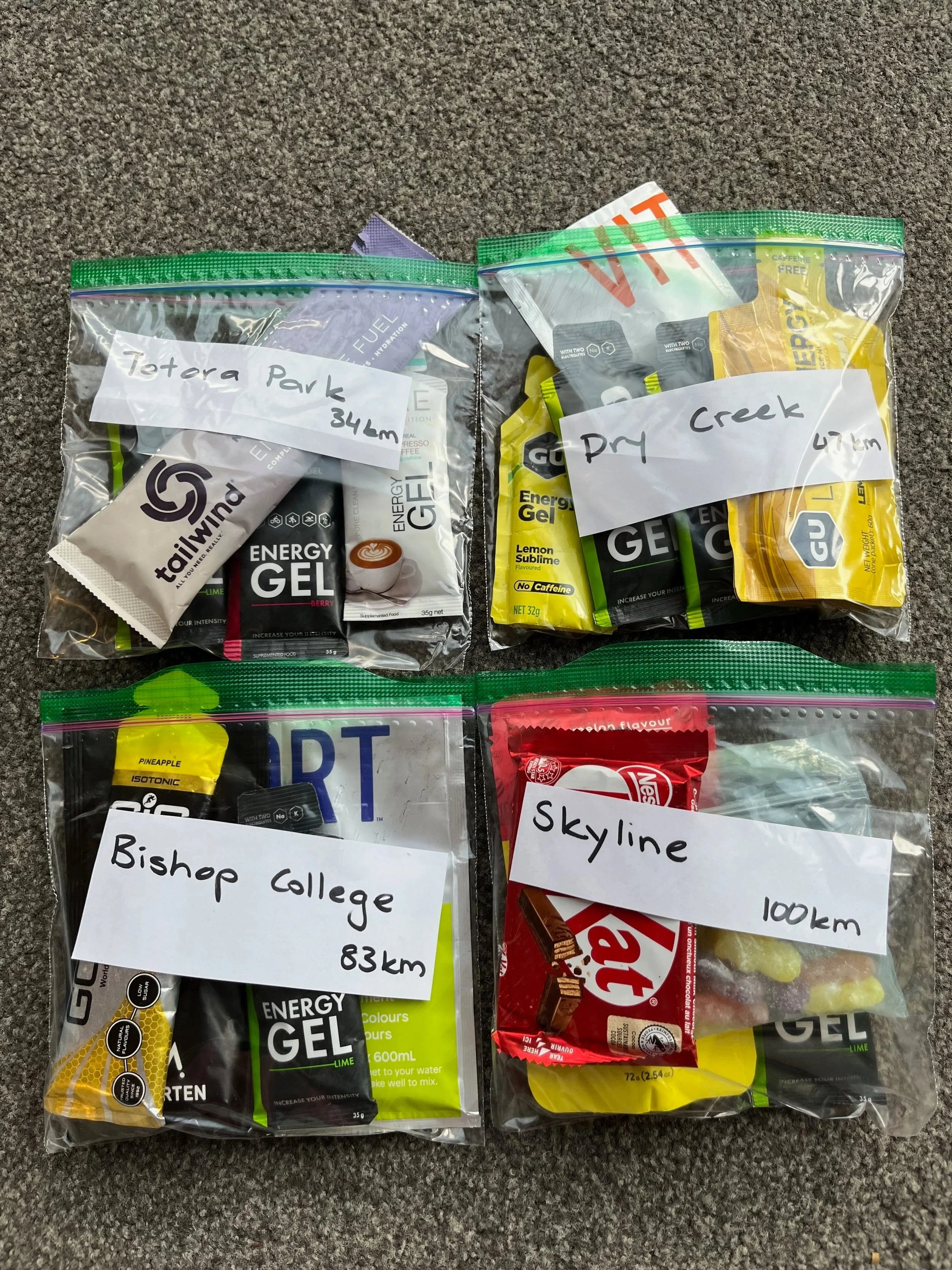
An example of how you might pack the nutrition that the athlete needs to leave the aid station with. Note the bags labelled with the aid station name. This can really streamline the nutrition handoff.
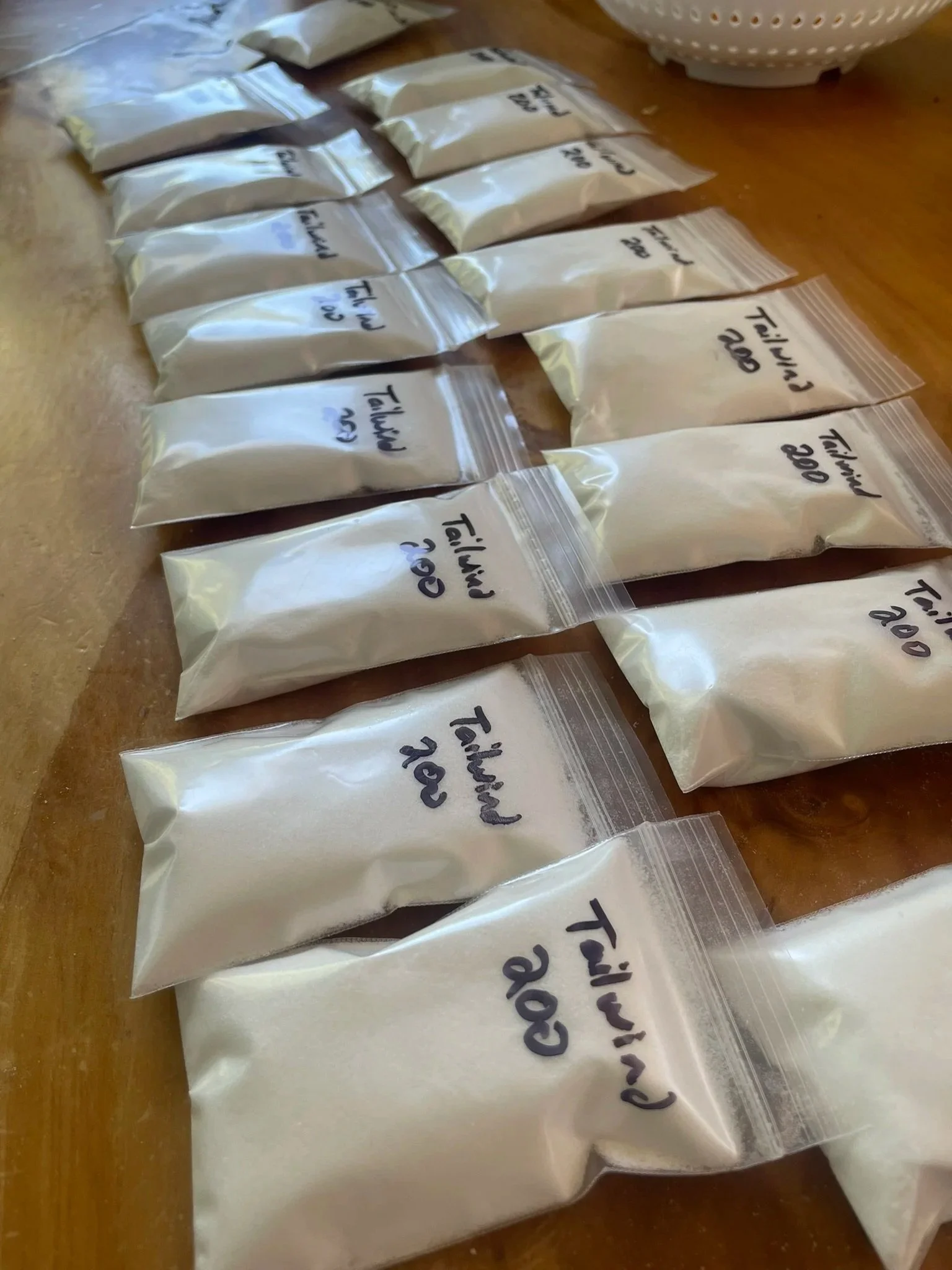
Nutrition is organised and labelled in easy-to-access bags.
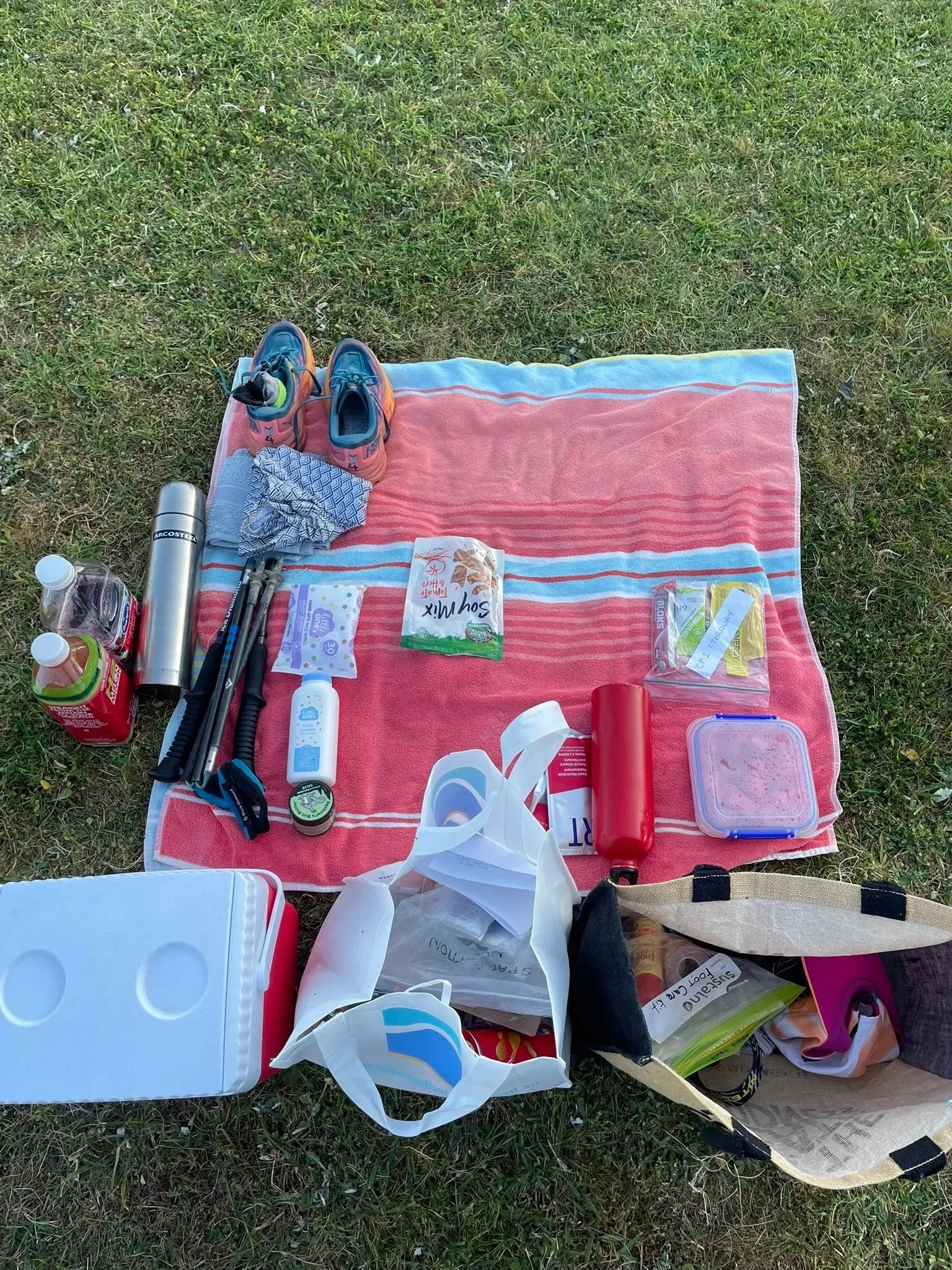
Gear the runner is most likely to need laid out on a towel, but still grouped into categories like food, clothing, first-aid, etc.
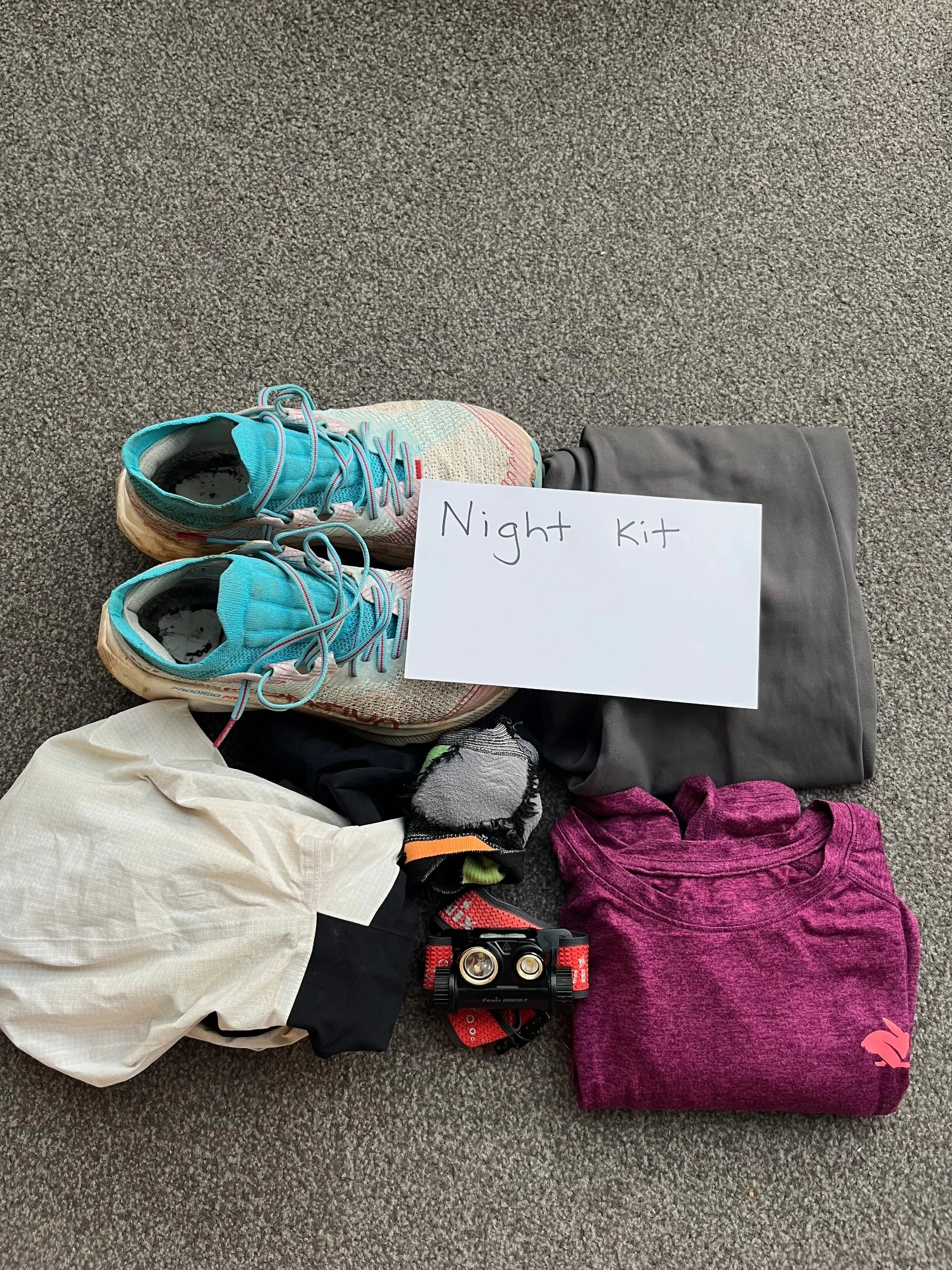
Later in the race, it’s good to have a separate ‘night kit’ ready to go. This includes warmer clothes and fully-charged head torches ready for the night section.
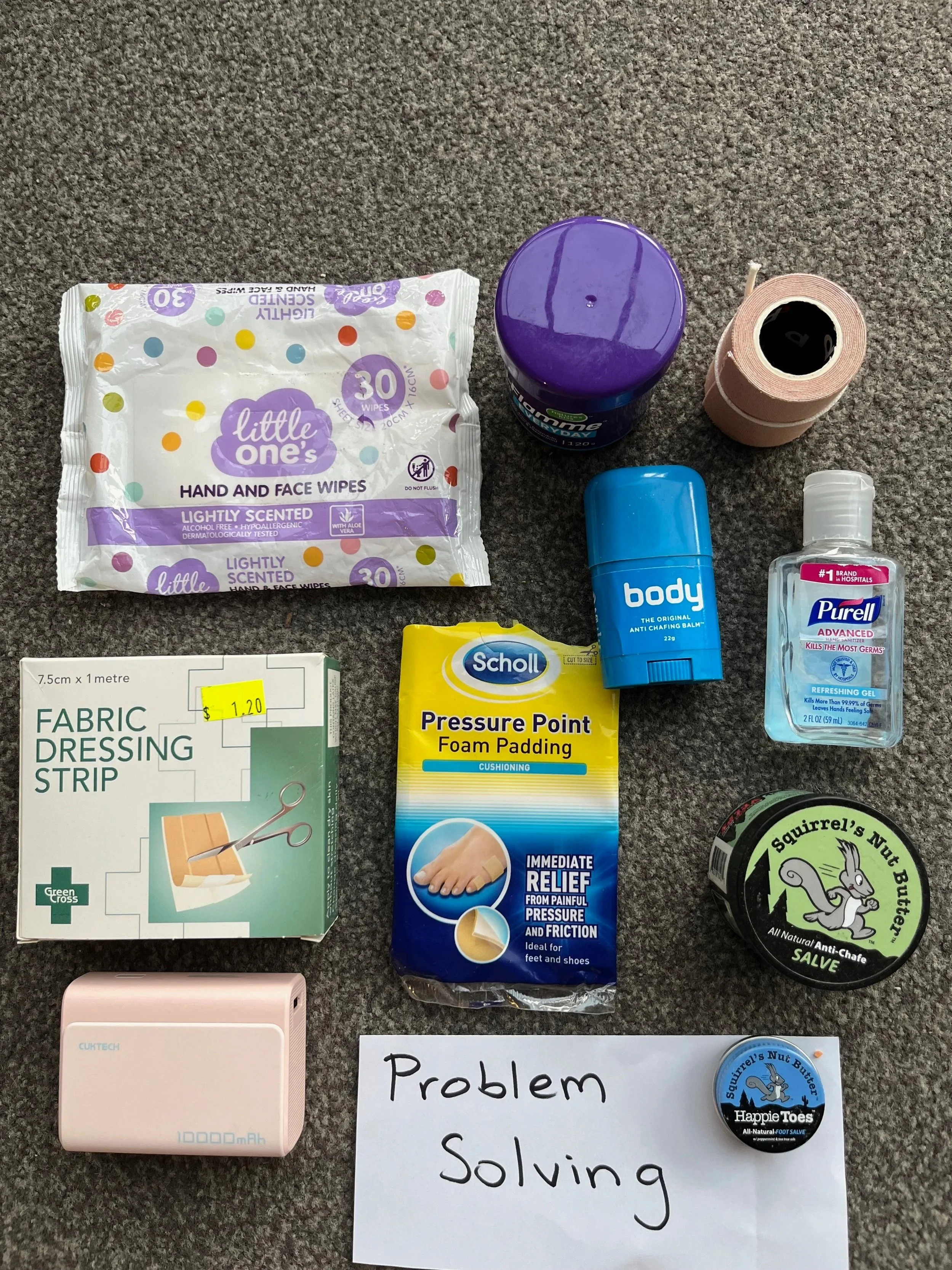
The hygiene and problem-solving kit is ready at all times just in case. Hopefully you don’t need to use this too much!
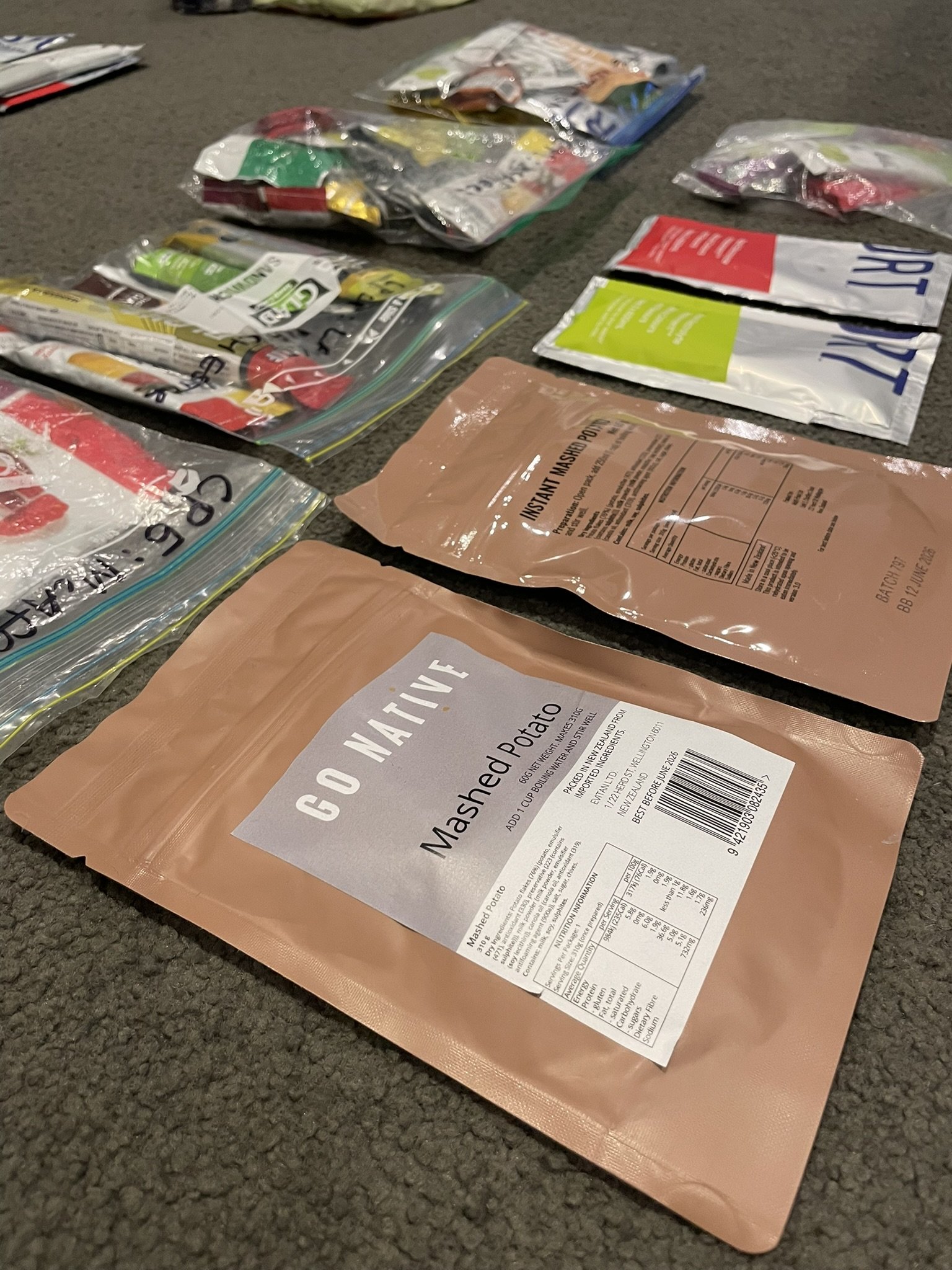
Warm food options for later in the night. Remember to bring along a thermos or other way to heat water!